
WHILE Phaedra Deckart has always been a woman working in a man’s world, she is finally seeing change.
LANA BEST spoke with her:
Phaedra Deckart doesn’t have a background in finance or accounting like many CEOs.
She lives in Launceston, is raising two children on her own, and works out at the gym five days a week.
The 49-year-old has always been ambitious, driven and worked hard to secure a high-level management position, but she’s still acutely aware of how rare it is to see a woman in a similar role. And when she reflects on her hard-fought career trajectory, it reminds her to give other women the best possible chance to reach their goals – and her message to the energy sector businesses in the room at a recent Hydro Tasmania stakeholder event – was for them to do the same.
She said that Solstice is always looking for ways to create diverse and inclusive teams and build a workplace that is embracing different points of view.
“I’ve prioritised building a diverse management team, successfully reaching our goal of 40% women this year,” she said.
“We have a non-gendered parental leave policy available for all carer givers, whether primary or secondary, so we’ve seen a lot of fathers taking up the 16 weeks of parental leave to spend some time in those early months with their child.”
“Tasmania has a real opportunity to create a workforce with a future as new projects and new business comes into the state.”
“Sponsorship and inclusivity play a key role in making sure we’re putting the right people forward and not hiring in our own image.”
Phaedra, who has been the CEO of Solstice Energy, formerly known as Tas Gas, for the past four years, said she was the first to be university educated in her family and that her aspirations were shaped by the classic British television series, Rumpole of the Bailey!
“I had intended to become a criminal barrister – just without the cigars, cheap red wine and fried breakfast,” she said.
After completing her law degree at Flinders University, she took a turn away from that conventional career path and started he first job post the recession of the early 1990s and ended up at an aeronautical engineering firm as the in-house counsel as it tested Blackhawk helicopters at Technology Park in Adelaide.
“So it wasn’t a career path to criminal defence prosecution but it was a pretty nice stepping stone to the next two jobs I had working in law firms in Adelaide and then in Melbourne in commercial litigation first and then engineering & construction law,” she said.
“I do like to occasionally scare engineers because I worked on Anaconda Nickel’s Murrin Murrin nickel cobalt mine arbitration between Fluor Daniel and Anaconda for a couple of years and I learned a lot about process flow diagrams and piping and instrumentation diagrams – and they’re always a little bit surprised that I know how to read one.”
There was no doubt that Phaedra was working in a man’s world and female role models were few and far between.
She was literally the only woman at the table and while she thinks its great that things have changed and more diversity is coming through the industry, she also knows there’s a long way to go to reach a perfect balance.
It was a move back to Adelaide, to oil and gas exploration and production company Santos, that took her in a new direction and a role that saw her travelling the globe.
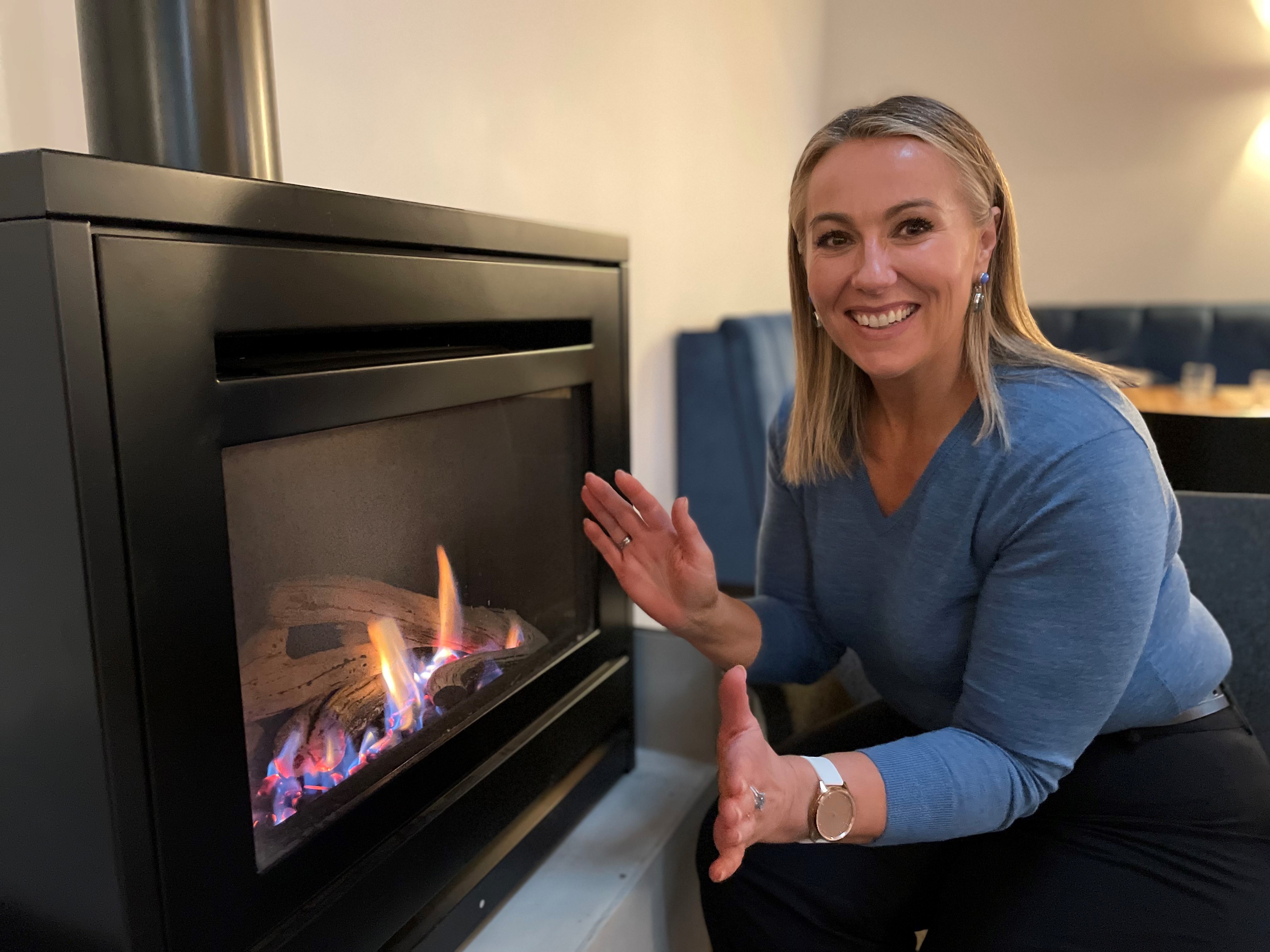
During 15 years with the company she progressed from a lawyer into gas marketing in eastern Australia, then into corporate governance followed by a role in LNG travelling to places like Washington, Korea and Paris.
Returning to Melbourne, Phaedra took on the AGL wholesale gas portfolio, the largest domestic gas portfolio across Eastern Australia at the time and once again found herself the first woman to take on that role.
She soon had the responsibility for origination of gas, power, coal logistics and the establishment of the AGL LNG import terminal project from its inception.
In 2020, during the height of the pandemic, and via lockdown in a Hobart hotel, Phaedra made the move to Tasmania to take up the CEO position with Tas Gas, now Solstice, with her family following close behind.
“These decisions were not made in a silo – I was prepared by sponsorship and it’s a crucial factor often overlooked when we are talking about career advancement and how to get more and more women into key roles,” she said.
“I can pinpoint every significant step of my career from the sponsor that supported me to get there.”
Mentors have played a key role and they’re important for women in a key role, to make sure they’re supported, but sponsorship is what gets them into the role.
“The key to getting more women into leadership is finding a way to give them profit and loss responsibility. In my case, I gained valuable commercial deal-making experience at Santos when the Moomba gas plant exploded in 2004, and I was the lawyer in charge of managing the legal fallout.”
“We looked after all commercial customer claims and the insurance claim that was ultimately successful, and helped minimise the regulatory and legal impact on the business.
“I worked closely with the executive in charge of that business unit at the time and when he knew I wanted to move into commercial he backed me all the way.”
“I later acquired that crucial P&L responsibility at AGL while managing the gas portfolio.”
Of course it hasn’t all been smooth sailing, in life or work, for Phaedra. She has had her fair share of personal challenges along the way, including relocating away from her family supports.
Like any personal challenge that has to be managed while at work, it can be the make or break of a career.
Phaedra said she felt understood and supported, and that it’s times like that when the wrong approach in a business would result in the loss of a valuable worker.
“I would invite all business managers to look around and identify their talent and actively champion and sponsor them – not just mentor them and tell them how good they’re doing – go and help them do it by pushing them into that next role.
“Give that recruiter a list of names of people, especially women, that you know might not be standing out but you know have what it takes.
“And when they are down, lift them up – there is a place for understanding and compassion and it’s essential if you want to keep the best in the business.”
 Tasmanian Business Reporter
Leave a comment