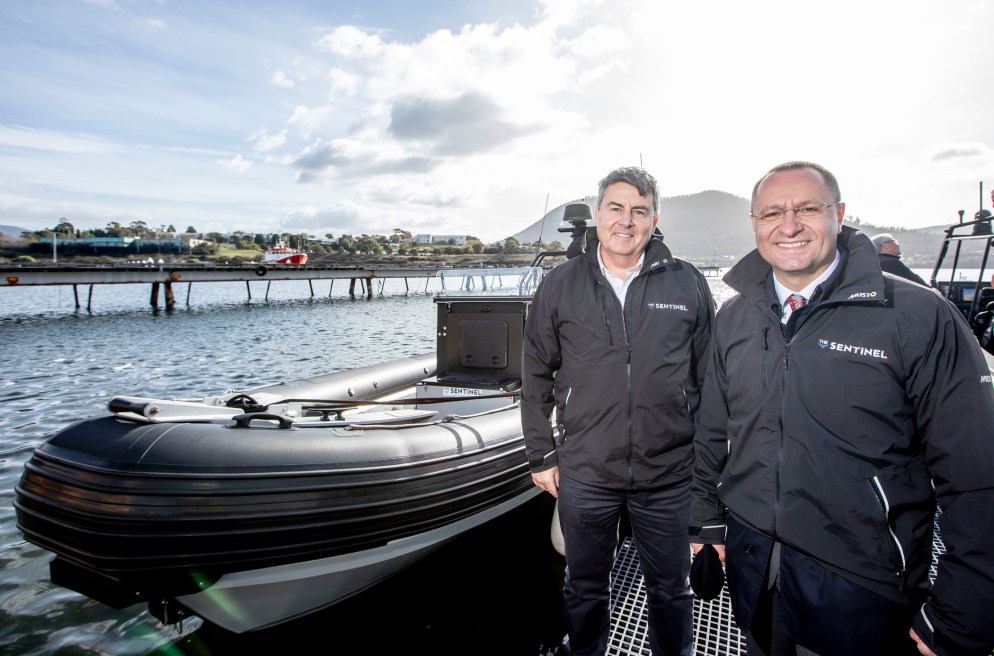
SENTINEL Boats, which started life as a business that pioneered the first polyethylene salmon pens in Tasmania, now uses the indestructible plastic to build high end defence vessels – some of which are off to the Ukrainian Armed Forces.
Editor, LANA BEST reports:
A consignment of state-of-the-art Sentinel 830R Rigid Hulled Inflatable Boats will form part of the $100 million military assistance package recently announced by Deputy Prime Minister and Minister for Defence, Richard Marles.
Ambassador of Ukraine, Vasyl Myroshnychenko, visited Sentinel’s Hobart facility recently to inspect the vessels under construction and to experience the on-water performance of the 830R first-hand.
Sentinel Boats CEO George McGuire said Sentinel was honoured to welcome Ambassador Myroshnychenko, and to be one of the Australian companies selected to provide support on the Ukrainian frontlines.
Mr McGuire said the selection demonstrated a notable display of trust in the Sentinel family of boats, which are built at Derwent Park, Hobart.
“The ambassador immediately understood how these boats would be used, he understood the agility and speed and their load-carrying capacity and he and could see how the Ukraine special forces could use them in challenging situations,” Mr McGuire said.

“We have a proud 23-year history of building boats, and the fact that those first boats are still in service, often on their third engine, shows their durability.”
Best known as the watercraft long used by Tasmania Police, it’s the company’s experience with defence, law enforcement and government agencies across Australia and New Zealand that has built its reputation.
Last year the New Zealand defence force chose Sentinel to add to it fleet and both the Queensland and Northern Territory Police are customers.

“The speed and agility of the 830R platform is expected to be used across a range of mission profiles, from riverine operations in Ukraine’s complex waterways, through to open sea boarding operations,” Mr McGuire said.
“The 830R can be rapidly deployed and requires minimal maintenance, resulting in greater operational availability whenever the Ukrainian forces need it.”
Mr McGuire said Sentinel Boats was the world-leader in building military boats using high-density polyethylene (HDPE). HDPE offers extraordinary strength and impact resistance, as well as high stability and vibration dampening qualities that, combined with advanced design, improve safety and reduce crew fatigue.
HDPE does not suffer from the electrolysis effects that limit the life of similar aluminium boats in high use or demanding operational situations.
The longevity of HDPE in harsh marine environments means the Ukrainian forces will not have to purchase replacement boats for many decades to come. This will allow scarce funds to be focussed on reconstruction, rather than re-equipping to deter any further incursions.
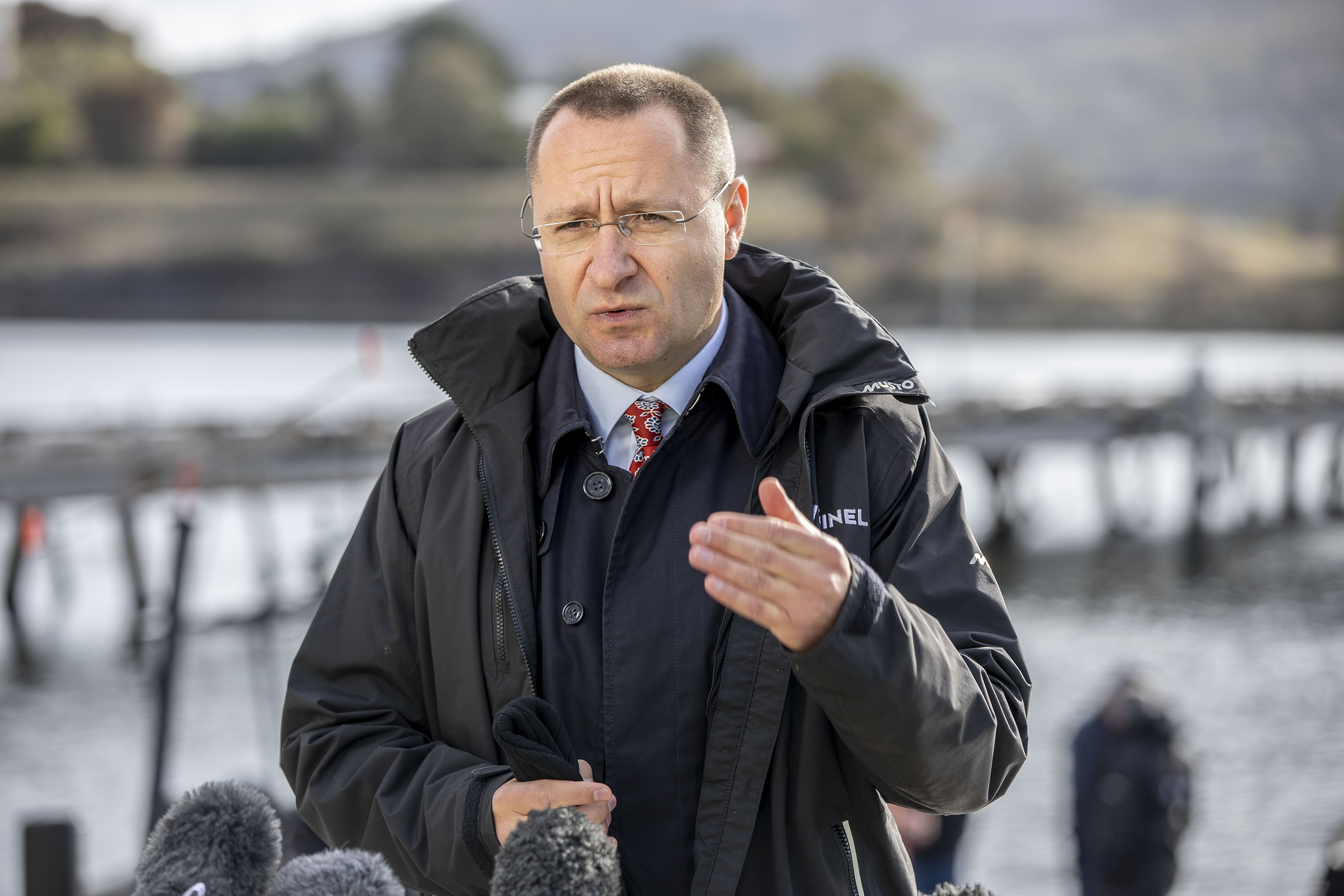
“The reduced cost ownership benefit HPDE offers is demonstrated by Sentinel’s first boat still being in active service after nearly 30 years of daily use in a demanding commercial environment,” Mr McGuire said.
Mr McGuire said the Ukrainian supply contract was a tribute to the dedication of the Sentinel Boats team and designers One2Three naval architects.
“It is the ultimate honour to have our craftmanship and reliability trusted internationally and to have this opportunity to stand in solidarity with the people of Ukraine,” he said.
The RHIBs, worth around $700,000 each, are currently under construction in Sentinel Boat’s dedicated Hobart workshop and are expected to be completed by the end of June. They can be spotted undergoing sea trials on the Derwent River over the next few weeks.
 Tasmanian Business Reporter
Leave a comment